
Find Fountain Residents Through Records
Fountain keeps no single master list of residents. Every record speaks to one connection. The Assessor ties a name to a parcel. The Recorder indexes the parties to deeds and other recorded instruments. Colorado's voter tool checks one registration rather than a whole street. The library district's regional history room holds older directories, telephone books, newspapers, and yearbooks. A court docket shows a hearing, not a biography.
Strong searches begin with an anchor, then switch sources. A current address unlocks the parcel, legal description, GIS polygon, permit history, and deed chain. A bare name needs a second anchor, such as a date, case number, exact street, or directory year. Old addresses may need a street guide. Fountain-area street names and odd-even numbering shifted between the 1870s and 1917. A dead end can mean several things. It may be a gap, a protected record, a different custodian, or a case of mistaken identity.
- Write down the exact name, address, date range, and reason for the search before opening a portal.
- Use the El Paso County property search to find the parcel, situs address, mailing address, and legal description.
- Move the parcel or party information to the Recorder, court docket, voter, or permit source that answers the next question.
- Use Pikes Peak Library District for directory years, reverse street guides, NewsFinder, maps, and historical records.
- Request an identified record from the proper custodian when an online index ends, rather than asking an office to find an unknown person.
Note: A public record can establish a recorded fact without proving current occupancy, identity, or a complete history.
Fountain Offices Behind the Resident Roll
Most records for Fountain live in Colorado Springs, where El Paso County keeps them. The Recorder, Assessor, Elections, Public Health, and the Fourth Judicial District each hold one piece. City Hall is separate. It handles municipal licenses, cemetery entries, code records, ordinances, and Fountain Court of Record matters. Names matter here. A county CORA request cannot substitute for a court form or a vital-record eligibility rule.
El Paso County Clerk and Recorder
Citizens Service Center
1675 W. Garden of the Gods Road
Colorado Springs, CO 80907
719-520-6200
El Paso County Assessor
Citizens Service Center, Suite 2300
1675 W. Garden of the Gods Road
Colorado Springs, CO 80907
719-520-6600
El Paso County Elections
Suite 2202
1675 W. Garden of the Gods Road
Colorado Springs, CO 80907
719-575-VOTE (8683)
Recording copies come from the Recorder. Copies arrive by email, mail, or counter visit. Assessor records are easier through the public portal than a CORA request. Elections keeps local lists and maps. The online voter tool, though, asks for your own name, ZIP code, and birth date. Judicial records go through the Fourth District. For a narrow Fountain request, start with the city Clerk's page.
Fountain Parcel Records and Legal Descriptions
The property roll is the best first stop for a current address. The El Paso County Assessor Property Search is free. County guidance walks through an owner-name search. Save what the result shows. It may include the owner name, mailing address, situs address, parcel or schedule number, legal description, tax districts, values, and any displayed sales or assessment history. The situs is the mapped land. The mailing address can be somewhere else entirely. Legal descriptions stay useful when a street name or number has changed.
The portal is a live interface, not a fixed form. Search a surname with a first name or initial. A common surname can return parcels across several streets, so plan on sifting. Inspect each match against the exact street and parcel. Then carry the parcel number into the county GIS. Or carry the lot and block into the Recorder. The Recorder's index then shows who bought, sold, or borrowed against that land over time. An exemption, an assessment value, or a mailing address is a clue about a parcel record. It is not proof that a person sleeps there today.
| Assessor field or mode | Use in a Fountain search | Research status |
|---|---|---|
| Owner name | Move from a known name to possible parcels | County-described; exact live label needs capture |
| Street or property address | Move from a known place to the matching situs | Expected; exact live label needs capture |
| Parcel, account, or schedule | Keep one parcel distinct from same-name results | County parcel identifiers are documented |
| Legal description | Bridge a deed, plat, lot, block, or survey record | Documented by county; live control needs capture |
| ZIP or city filter | Use only if the portal confirms its meaning | Not exposed; do not assume it follows city limits |
For a visual check, the official property-search portal shows the kind of parcel interface a searcher meets before a name moves on to another record set. It is a doorway, not a destination.
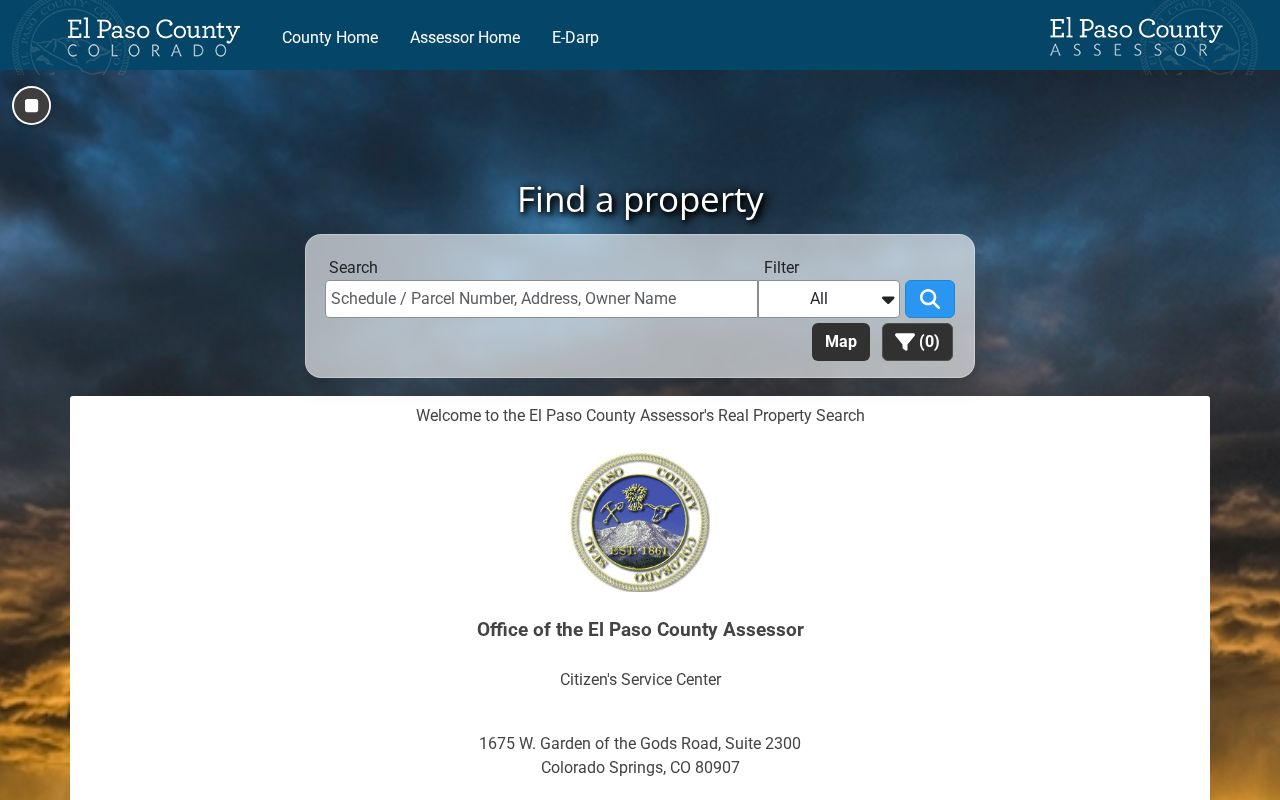
An image is only a starting point. Before relying on any parcel detail, verify the result on the live search itself rather than a saved view.
- Parcel
- A mapped unit of land identified by a county account or parcel number.
- Situs address
- The physical location assigned to the parcel, distinct from the mailing address.
- Legal description
- The lot, block, plat, or survey language that identifies land when a street address is unclear.
- Roll
- A government list, such as an assessment or voter roll, built for a defined administrative purpose.
Modern Fountain Resident Sources
Not every current source means resident. Owner, voter, recorded party, court party, and historical household evidence each travel in a separate lane. Keeping those lanes apart makes a Fountain residents directory more accurate. That helps when the first source misses.
| Source | What it can show | Keeper | Access route |
|---|---|---|---|
| Property parcel card | Owner name, situs and mailing address, legal land, values | El Paso Assessor | Free public portal |
| Recorded instrument index | Grantors, grantees, deeds, liens, plats, dates | Clerk and Recorder | Free index; copies cost extra |
| Voter registration | Individual self-match and public file categories | Colorado SOS / county Elections | Self-lookup or data request |
| Court docket | Hearing date, case, party, location, appearance type | Colorado Judicial Branch | Public docket; file by request |
| Permit or plan | Address, parcel, project, status, valuation, named parties | PPRBD | Address and map portals |
| Directory or newspaper | Year-specific address, event, obituary, or organization lead | PPLD and archives | Digital, microfilm, or staff help |
Official rolls are narrow but easy to verify. Commercial tools blend many feeds and return fast reports. Stale or duplicated data, though, can make a name look surer than it is. A parcel number, a case docket, or a scanned directory page leads back to the original custodian. Write down the source. The date, exact wording, and limits of each hit make the workflow stick.
| Official record route | Defined custodian, stated fields, known access rules, and a way to request a copy or correction. |
|---|---|
| Commercial search route | Convenient aggregation that may be stale, incomplete, duplicated, or unclear about the underlying source. |
| Best practice | Use an official result to confirm a lead and do not treat a combined report as proof of current residence. |
Note: A city or ZIP label can describe postal delivery or a map layer without proving that the parcel sits inside Fountain's incorporated boundary.
Fountain Dockets Need a Case Number
Colorado runs its docket search through the Judicial Branch site, and Fountain matters travel the Fourth Judicial District route shared with El Paso County. A date alone will not work. The form demands at least one filter beyond date. Options include judicial district, county, courthouse, court type, division, case class, case sequence, party, business, attorney name, or attorney bar number. A party search finds a docket event. It is not a request for the entire court file.
A result can show a hearing date and time, duration, case number, hearing type, location, courtroom, appearance type, and a result or status when one is supplied. Export and printable controls may ride along with pagination. A missing case has explanations. It may be sealed, juvenile, suppressed, migrated, or non-indexed. For a complaint, disposition, probate filing, divorce decree, or certified copy, use the Judicial document request form and provide a case number when possible.
The Judicial Building sits at 270 S. Tejon Street in Colorado Springs. Room S101 handles clerk and research traffic. The court lists 719-452-5000 for the main route and 719-452-5490 for records research. The web request form lists $0.25 per page, a $5 name search, certification charges, and a three-business-day response target unless an extenuating circumstance applies. Confirm the current fee notice before paying.
The official docket-search page shows the filter and result context behind this Fountain residents directory workflow. Every field you add narrows the noise.
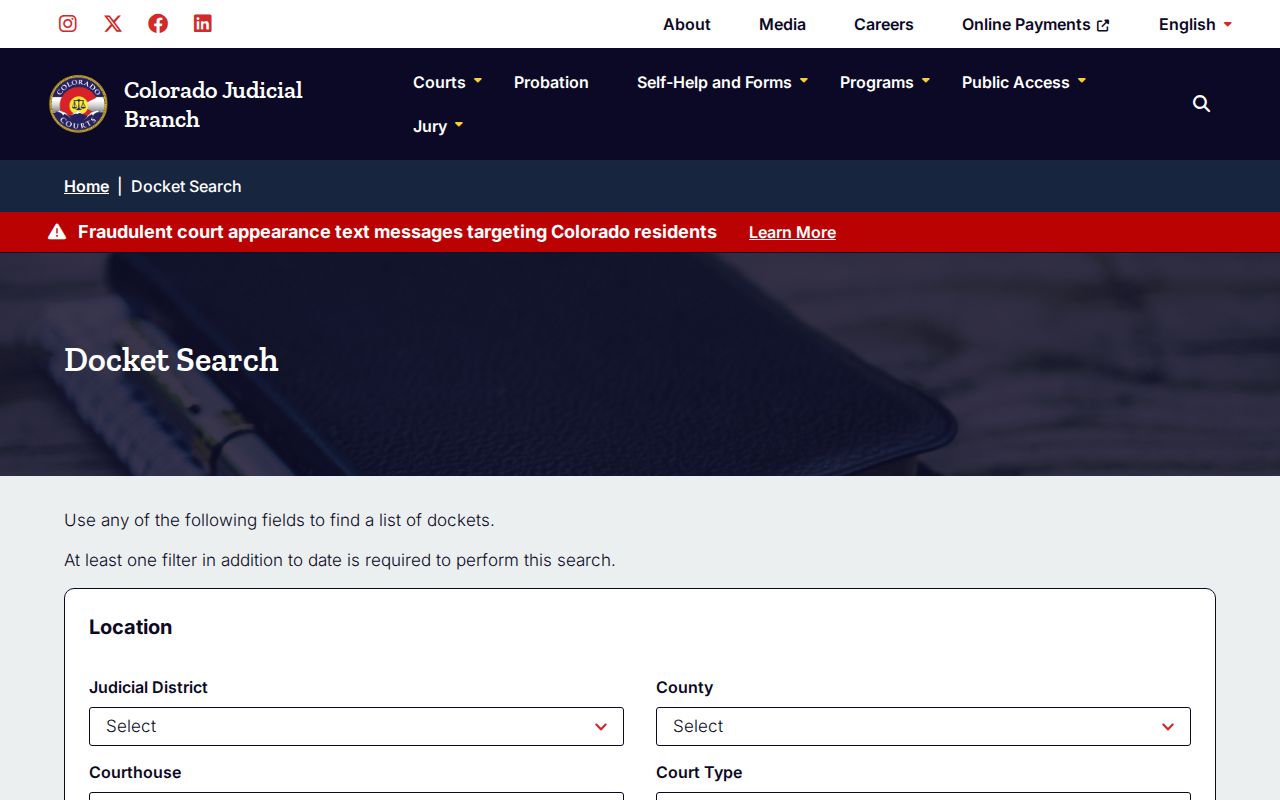
A docket event proves a hearing, nothing more. It is not a judgment, a conviction, an address confirmation, or a complete party file, so carry the displayed case number and county into any document request you make.
Fountain Voter Lookup Limits
The Colorado Secretary of State voter lookup serves one person at a time. It wants a first name, last name, ZIP, and full birth date. After a recent move, the page suggests trying a prior ZIP. Confidential voters stay hidden. So do under-18 and pre-registration records. Those guardrails matter. Nobody can bend this public form into a street-by-street Fountain resident directory by cycling name fields.
Ordinary voter-file products can pack in plenty. They include full name, residential address, party or affiliation date, registration status, birth year, precinct or district, phone when provided, gender identity when provided, and vote history. Full birth date, Social Security number, driver-license or ID number, email, and ballot-return signature stay private. A record can sit inactive, pending list maintenance, protected, or tied to a prior address. Registration never equals current occupancy.
Local lists, maps, and precinct material route through El Paso Elections. That office sits at the Citizens Service Center. Call 719-575-VOTE (8683) or write elections@elpasoco.com. State data requests go through the Elections Division form and may carry report-specific fees. A public data request is not a license to publish protected information. It also reveals no ballot choice.
The voter lookup page shows the self-search surface. It serves a narrow purpose for Fountain voter records.
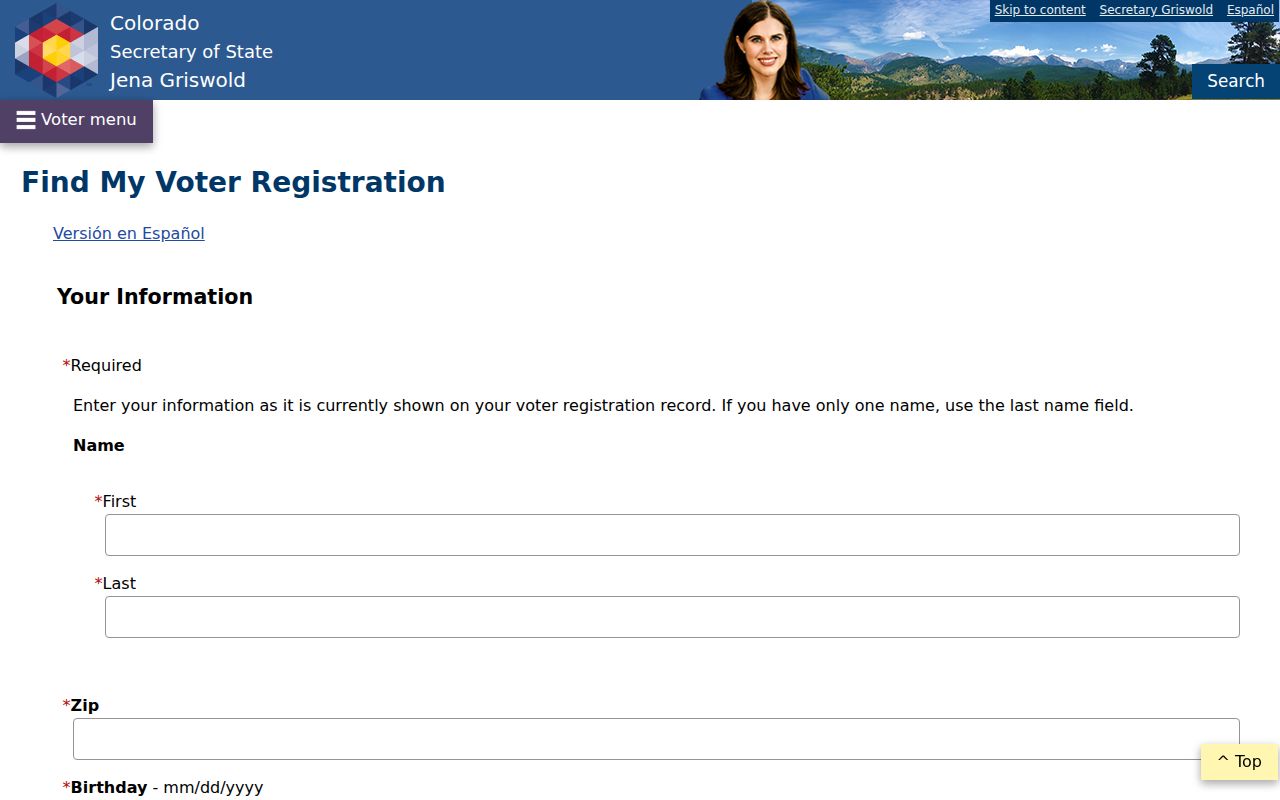
Check spelling and the prior-ZIP tip first. Then respect the possibility of confidentiality or a move, and never ask a clerk to disclose a protected address.
Fountain Deeds From Grantee Backward
The Recorder's index earns its keep after the property roll supplies a name, parcel, legal description, reception number, date, or another identifying clue. Work backward from that clue. El Paso County says it records and preserves deeds, deeds of trust, assignments and releases, liens, powers of attorney, plats, and other instruments. Its public Aumentum page carries a disclaimer. The exact dynamic search fields and online start year are not published. Do not invent a coverage date for the Fountain deeds index.
- Save the current Assessor owner, situs address, parcel, and lot, block, or survey language.
- Find the identified purchase deed in the Recorder Public Access portal or ask for a specific instrument.
- Read the grantor and grantee names, reception number, document type, date, and legal description.
- Search the prior grantor as an earlier grantee, keeping the same land description and a sensible date range.
- When the online trail ends, inspect older books or film at the Citizens Service Center or request a known book, page, or reception record.
County staff do not run title searches for requesters. Send copy requests to copyrequests@elpasoco.com or by mail. The published copy fee is $0.25 per page. Certification, plat, and handling charges are billed separately. The FAQ sends records before 1996 to the Citizens Service Center. Treat that instruction carefully. It is not proof the online Fountain deed index begins in 1996.
The Recorder page shows the public-access entry point for a Fountain record search.
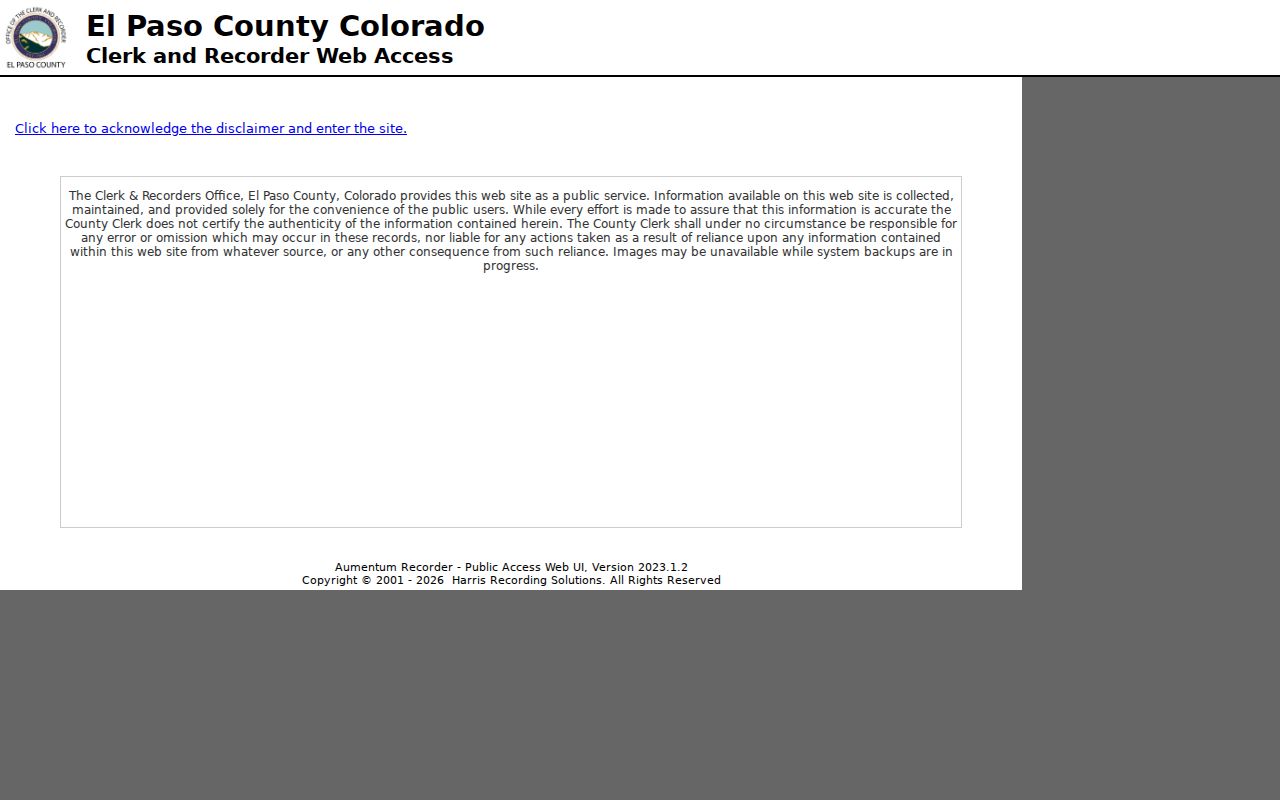
A deed is an instrument with named parties and land language. It proves a recording. It does not prove occupancy. Nor can it confirm that a same-name party is the right person in a Fountain property search, so read each instrument on its own terms before drawing conclusions.
Fountain Birth, Death, and Marriage Records
Vital records take a different door. They sit outside the property and court indexes a Fountain records search usually mines. El Paso County Public Health issues certified Colorado birth records. It also issues El Paso County death records. CDPHE is the state custodian and ordering route. Marriage and civil-union licenses belong to the Clerk and Recorder. Divorce case files and certified orders come from the Fourth Judicial District. No universal public Fountain birth or death index exists.
- Birth certificate
- El Paso Public Health or CDPHE; order in person, by mail, or through an approved online vendor. Eligibility, ID, and a direct or tangible interest may apply.
- Death certificate
- El Paso Public Health or CDPHE; use the county or state order route. The record is confidential under C.R.S. 25-2-117.
- Marriage or civil-union license
- El Paso Clerk and Recorder; use the online application and Clerk copy route. The license or certificate is public, while the application is restricted.
- Divorce file or order
- Fourth Judicial District; use the docket and Judicial document-request route. Court-file and certification rules still apply.
The county's vital records pricing is simple. A first copy of a birth or death certificate costs $25. Extra copies ordered at the same time run $20 each. The June 2026 birth application asks who is requesting, plus the subject's name and birth details. It also asks for the eligibility reason, identity documents, payment, and how the copy should ship. Appointments are no longer needed for in-person service. The current page carries the hours and ID rules. Colorado publishes no blanket rule that opens birth records after a set number of years.
Some questions need a different route. Birth parents can use Colorado's Voluntary Adoption Registry or the confidential-intermediary program if they qualify. Heirs should go through probate records at the court. For an older death clue, try the Pikes Peak NewsFinder, cemetery files, obituaries, and probate material. These work better than treating a restricted certificate like an open index.
Fountain Directory Shelves and Street Guides
The historical Fountain residents directory trail runs through Pikes Peak Library District. Its Regional History and Genealogy department holds the collection. City directories there span 1879 to the present in physical, database, and digital form. A digitized R. L. Polk collection covers 1879 through 1929. Rural El Paso County directories exist too. Their years are 1937–38, 1947, 1949, 1951, 1955, 1962, 1969, and 1972. Telephone books cover most years from 1907 onward, with some gaps.
When a surname is unknown, the street guide or criss-cross section becomes the workhorse. Search the street and number first. Note the printed occupant or householder. Then compare against the alphabetical entry. PPLD cautions that street names shifted between the 1870s and 1917. Odd-even numbering flipped at least once. Coverage of Colorado Springs, Colorado City, Manitou Springs, rural El Paso County, and the Fountain area are not interchangeable. The Fountain city directory page gives the full historical collection treatment. The street page handles the current address chain.
The library's Regional History and Genealogy guide also routes you to the Carnegie Special Collections. It points as well to staff-pulled vault material, local newspapers, maps, yearbooks, and research help.
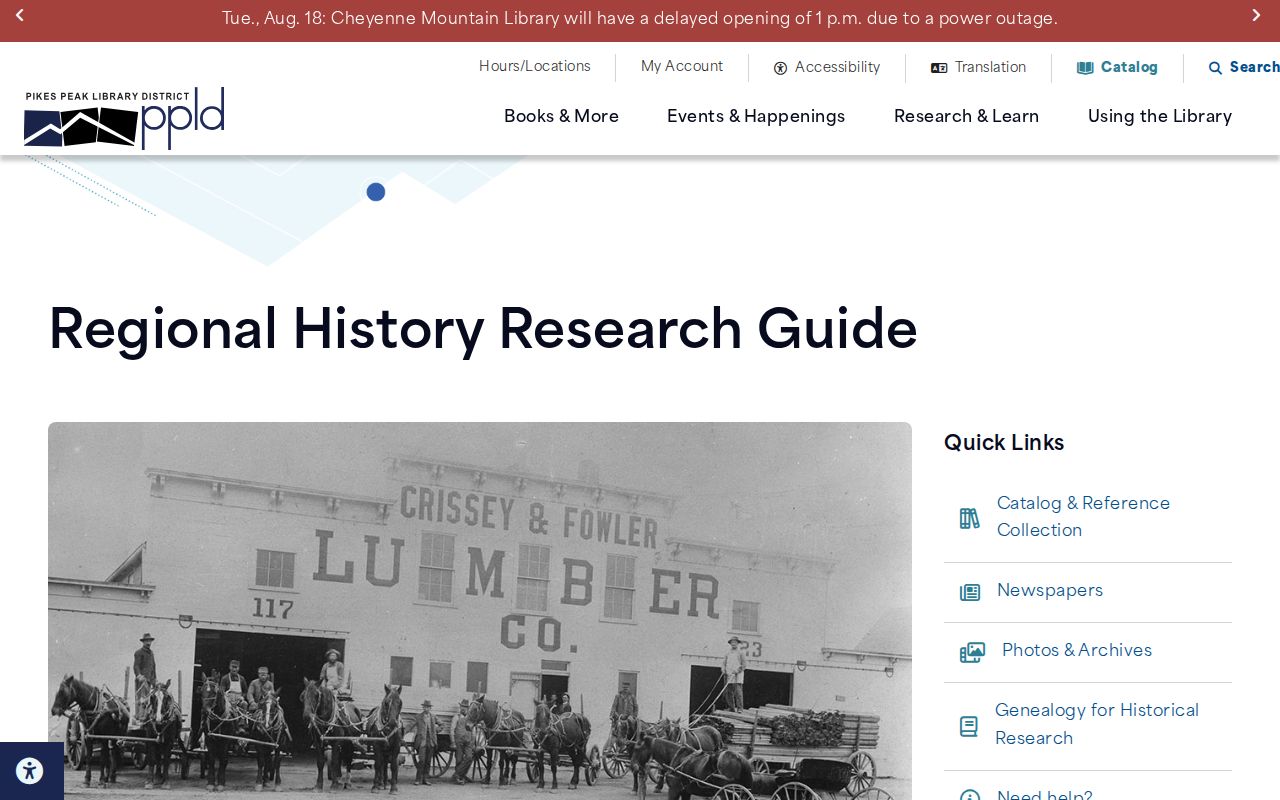
A directory entry proves only one thing: a publisher listed a person at an address in a stated year. It establishes no ownership, no present residence, and no reason the name later vanished from the volume.
- Criss-cross directory
- An address-to-occupant section that reverses the usual name-to-address order.
- Householder
- The person a directory places at an address; the label does not settle every household relationship.
- Abbreviation key
- The issue-specific legend needed to read printed markers without guessing their meaning.
Fountain Resident Block and Permit Records
A parcel map sharpens a name search without ever producing a resident list. The county Parcel MapServer and FeatureServer expose parcel polygons. They also expose the PARCEL display field, geometry, query, identify, export, and pagination controls, capped at 2,000 records per pull. City map layers add neighborhoods, wards, zoning, utilities, and public-safety and fire districts. The city warns its map data may be incomplete or inaccurate, though. The full address chain lives in the Fountain street directory workflow.
Building and plan clues come from the Pikes Peak Regional Building Department address search. It accepts a street name, low and high numbers, direction and type, parcel number, latitude and longitude. It also offers a choice among permits, plans, archived permit cards, or floodplain records. Its map filters by ZIP code, jurisdiction, districts, valuation, area, project, and street. A permit result names a project, contractor, date, parcel, status, and value. None of that makes the permit party a current resident.
The city Clerk and Code Compliance route covers municipal notices and nuisance or zoning records. It also reaches cemetery entries, business and liquor licenses, and Fountain Court of Record files. Keep any CORA request narrow: state the address, record type, date range, and department. Ask for inspection or an identified copy rather than an unbounded list of people.
Fountain Resident Names in Business Records
A state business filing or professional license can carry a Fountain name. But it may not carry a home address. The Colorado Secretary of State Business Entity Search supports routes by business name, trade name, trademark, ID number, and document number. Results may show entity status and formation date. They may also show entity ID, type, jurisdiction, principal office, registered agent, periodic-report month, and filing history. The SOS itself notes the registry does not certify that a business is actually operating.
DORA's MyLicense verification search takes a profession, first or middle name, last name, license type, license number, and status. Its "less is more" rule and wildcard option help with partial names. Fountain's City Clerk keeps a business-license list and liquor-license records. The city FAQ lists a $55 annual business-license fee. The city publishes no searchable citywide name roster. So request a defined list or date range.
The SOS search page shows the state filing route to use for an affiliation clue.
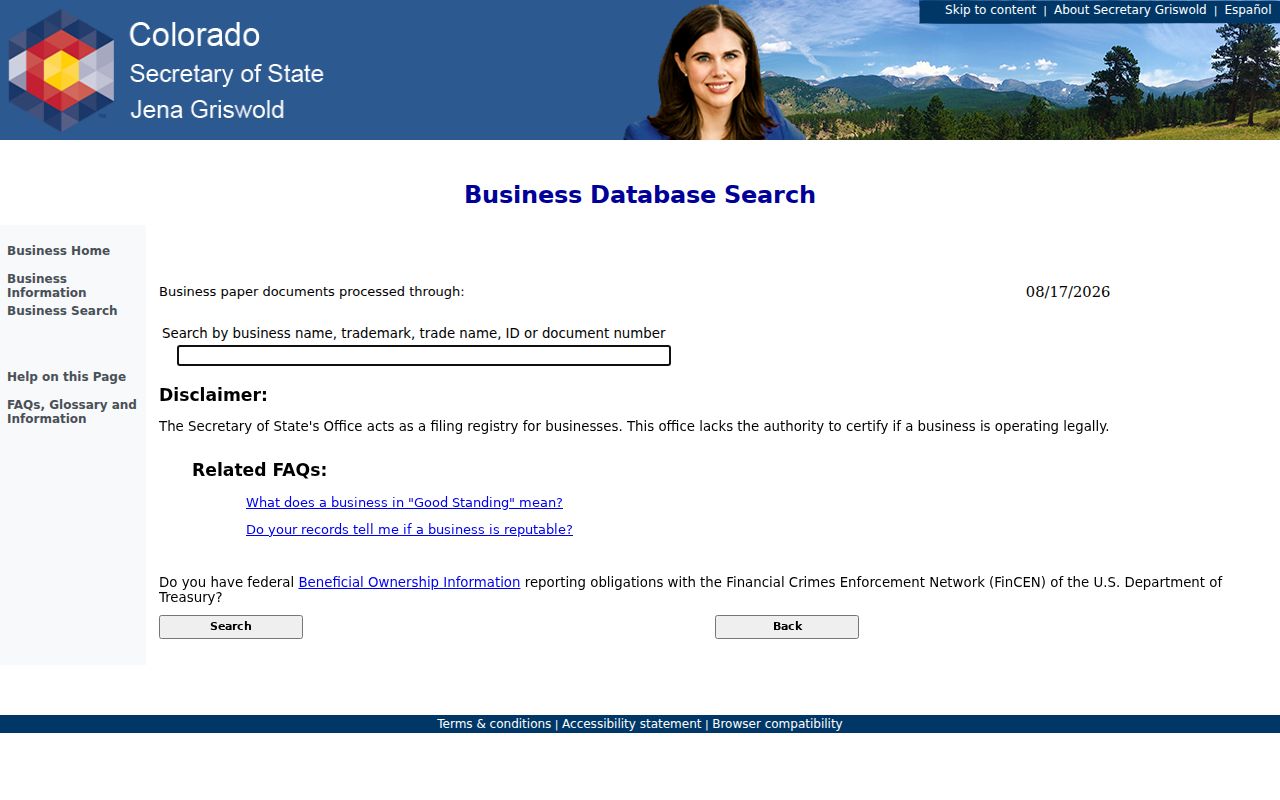
An entity ID, license number, or filing date separates a real match from a common name. A registered agent, principal office, contractor, or licensee is not automatically a Fountain household member.
When a Fountain Portal Stops
Online search is only the first access channel. The Recorder can receive an identified copy request by email or mail. The Assessor supplies a public portal and a phone route. The Elections office handles local lists and maps through its own data process. The court provides a web request form, courthouse terminals, mail, and email. Public Health uses county and state ordering paths. PPLD staff can pull noncirculating directories, microfilm, vault material, and finding aids.
Under the Colorado Open Records Act, a request should identify the custodian, date range, department, record type, and useful parcel, case, address, or document identifiers. El Paso County describes a usual response within three working days, a possible seven-working-day extension, the first two staff hours free, and a listed $29.50 hourly charge after that. CORA does not force an office to create a database, perform a title search, or disclose a protected vital, voter, court, or motor-vehicle record.
City Clerk requests use Fountain's own route. The Fountain City Clerk page lists City Hall at 116 S. Main Street, the main number 719-322-2000, a first hour of research time free, $30 per hour after that, and $0.25 per page. The page is the right starting place for a specified city record and a reminder that custodians differ.
See the City Clerk capture for the municipal records and CORA route.
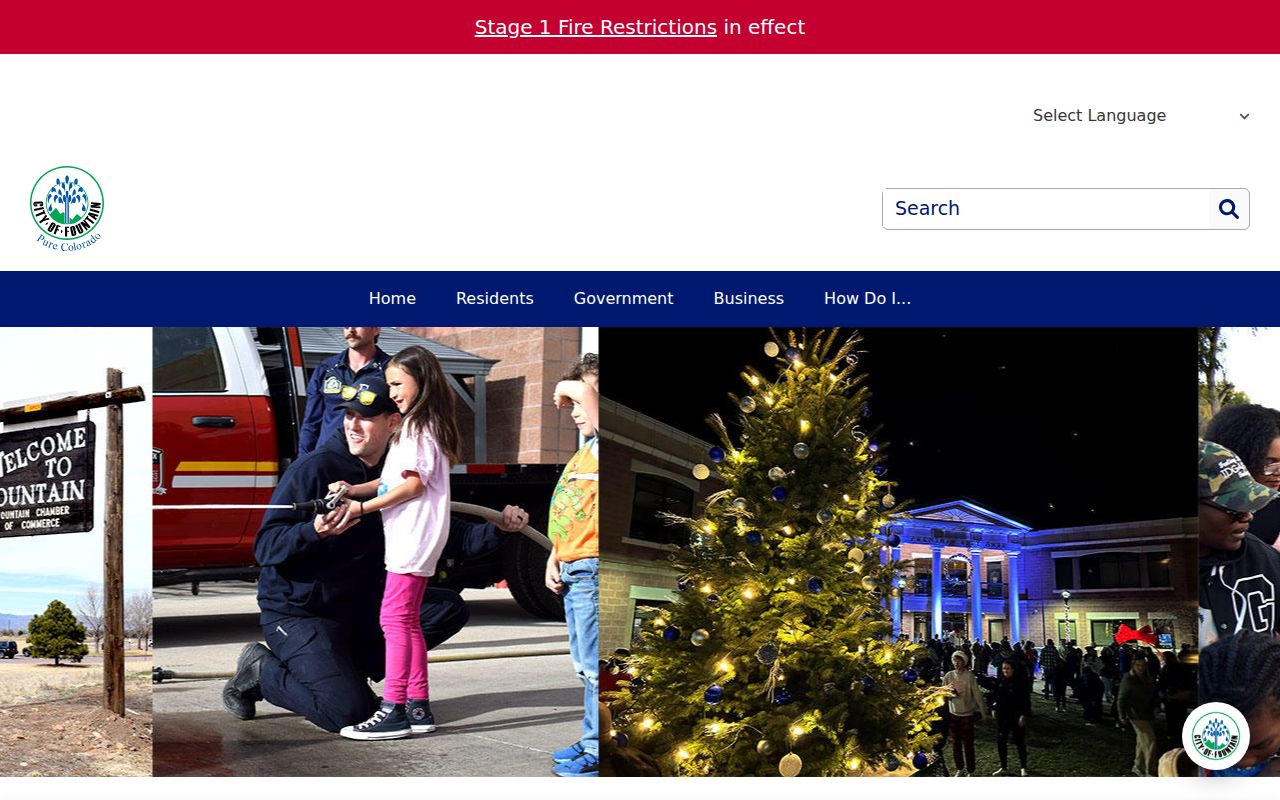
Before sending sensitive details, ask about the format, redactions, fee estimate, and delivery route. A narrow request is easier to answer and verify later.
Fountain ZIP Lines and Record History
Fountain's record geography has layers. The standard postal association is ZIP code 80817, served by the Fountain Post Office at 101 S. Santa Fe Avenue. That delivery area is not the incorporated city polygon. County parcels, city limits, neighborhoods, wards, utilities, fire districts, Census geography, and a postal city can each describe the same address differently. The USPS tool itself warns that a ZIP result does not confirm a person or company at an address.
Local history adds useful search anchors. Fountain was founded in 1859 and incorporated in 1903. City material points to Jimmy Camp Creek and Fountain Creek, the 1888 Big Blast, and the later Home Rule city. The 1903 El Paso County courthouse preservation story ties Clerk, sheriff, treasurer, surveyor, and museum records to a wider county history. Those names and events can rescue a newspaper or archive search when a surname alone fails.
Scale needs care too. Numbers drift. The Census QuickFacts profile gives Fountain a 2020 population of 29,802 and a 2024 estimate of 29,457. A city budget uses different years and contexts. El Paso County's voter total is county-wide, not Fountain's count. Good directory work keeps the source geography and date beside every number.
Note: Historical directory geography may use Colorado Springs, Colorado City, Manitou Springs, or rural El Paso labels even when a modern searcher says Fountain.
Fountain Record Alerts Worth Checking
Records can spark leads or false urgency. El Paso County's free Recording Notification Service can watch up to ten exact names or name variations and send an alert when one appears in a recorded document. It is a monitoring aid, not a title search. Before paying a sender for a copy, verify any letter against the county Recorder, Assessor, or Property Protection page.
Fake messages imitate real records. Colorado Judicial warned on May 19, 2026 about bogus court-appearance texts. The checks are simple: confirm the judicial district, courthouse, date, case number, and coloradojudicial.gov domain through an independent official page. Great Colorado Payback searches are free through the Treasury route, so check any upfront-fee demand against the state site. These alerts matter in a Fountain residents directory workflow because a scam can mimic the very records a person is trying to confirm.
Personal research has legal limits. Colorado's stalking statute is C.R.S. 18-3-602, and the harassment statute is C.R.S. 18-9-111. The Colorado Address Confidentiality Program and El Paso County's confidential-voter process can hide or substitute an address for a qualifying participant. Treat a protected or missing result as a stop sign, not an invitation to search unrelated systems.
Lawful use. Use Fountain records for family history, house history, civic research, reconnection, or a defined personal question. Do not use a record to stalk, harass, threaten, or harm another person, and verify every important fact with its custodian.
The El Paso County property-protection page gives deed-fraud guidance.
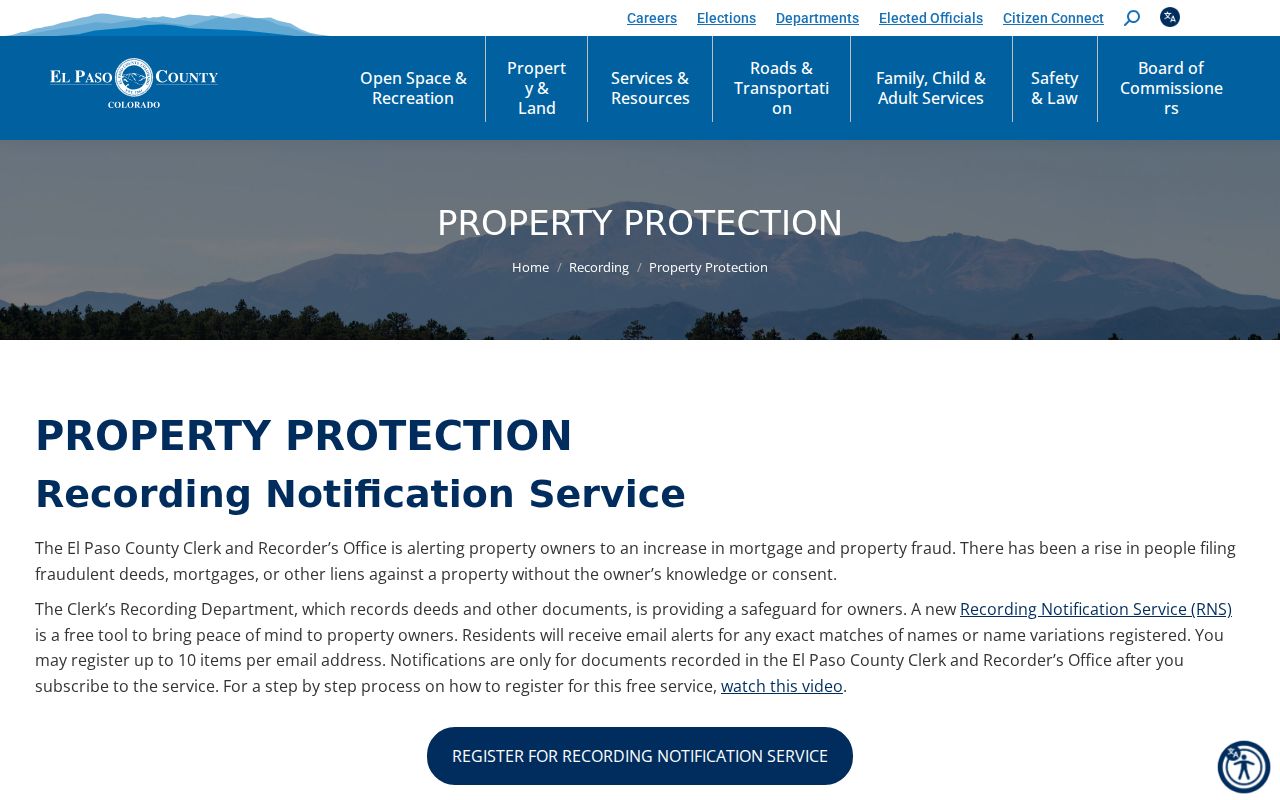
Pair the alert service with the parcel number, recorded instrument, and official copy route. It is not a complete resident list.