
What a Fountain Resident Record Means
The first step in a resident lookup is to name the kind of connection being tested. No official source confirms identity, current residence, legal status, and a complete history at once. A parcel card names an owner or tax-roll contact. A deed names parties to an instrument. A voter record can show a self-match or public file field. A directory gives a publisher's historical address entry. A docket names a case party or hearing event. The coverage table keeps those meanings visible.
| Record | What it confirms | Where | Access |
|---|---|---|---|
| Assessor parcel | Name associated with a parcel, situs, mailing address, values | El Paso Assessor | Free public portal; history is limited |
| Deed or plat | Recorded parties, land description, instrument and date | Clerk and Recorder | Free index; identified copies cost extra |
| Voter registration | Searcher's own registration match and public data categories | Colorado SOS / Elections | Individual form or data request |
| Court docket | Public hearing, case number, party, date, and place | Fourth Judicial District | Web docket; file by request |
| Vital or marriage record | Eligible certificate, license, or verification product | Public Health, CDPHE, Clerk | Eligibility and ID rules |
| Business or license file | Entity, agent, license type, number, or status | SOS / DORA / City Clerk | Free state search; city list request |
| Directory, obituary, or yearbook | Historical address, event, relationship, or school clue | PPLD and archives | Digital, microfilm, or staff help |
A good Fountain resident lookup writes down which row a result belongs to. That keeps an owner from being called an occupant, a docket party from being called a wrongdoer, and a historical entry from being presented as current. It also makes a records request more exact when the first portal cannot answer the question.
Fountain Resident Identity Check
A name alone is weak in county and library records. Use two anchors that come from different fields or dates. A parcel number plus a legal description can separate two people with the same name. A case number plus county and year can identify the right docket. A directory name plus exact street and issue year can support a historical household clue. A business ID, license number, or date can keep an affiliation record apart from a private person.
Normalize the name first. Preserve middle initials, suffixes, former or maiden names, spelling variants, and the exact order printed by a source. Then compare city or county, date, parcel, spouse or parent notation, court case, and street. Do not ask a custodian to confirm a private address by phone. Ask what record exists, which identifier is needed, and what access rule applies.
- Docket
- A court's schedule or event record, not necessarily the complete case file or final order.
- Index
- A finding aid with selected fields that points to a record; it may not include the document image.
- Certified copy
- A copy issued with the custodian's certification, often subject to a separate fee and eligibility rule.
- Disposition
- The recorded outcome or order in a case, which may need to be requested separately from a hearing entry.
Note: A same-name hit becomes useful only after a second anchor fits the date, place, parcel, case, or source geography.
The El Paso County property-search source shows the parcel interface used to anchor a name to a legal land record.
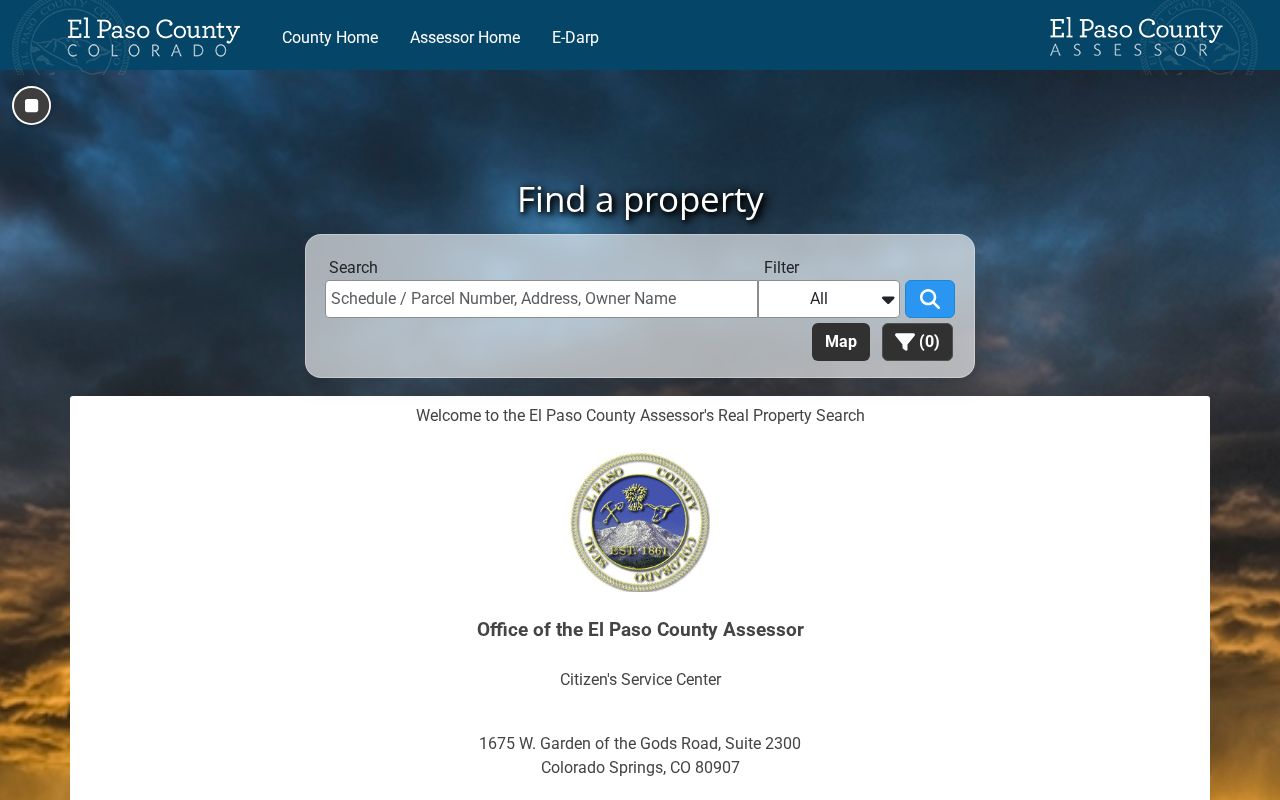
An owner or parcel field is an identity anchor, not proof that the person occupies the address today.
Colorado Voter Lookup for Fountain
The Colorado Secretary of State's individual tool is a narrow but useful resident lookup route when the searcher is checking their own registration. The form asks for first name, last name, ZIP, and birthday in month, day, and year format. It says to enter information as it appears on the registration and to try a prior ZIP after a move. The page excludes confidential voters and under-18 or pre-registration records.
| Field | Type | Required behavior | Format or note |
|---|---|---|---|
| First | Text | Part of the required information set | Use registration spelling |
| Last | Text | Part of the required information set | Use the surname on the record |
| ZIP | Text | Part of the required information set | Try a prior ZIP after a recent move |
| Birthday | Date text | Part of the required information set | MM/DD/YYYY |
| Search / Clear | Buttons | Live labels require confirmation | Search or reset the form |
The ordinary public file can contain full name, residential address, party or affiliation date, registration status, birth year, precinct or district, phone when provided, gender identity when provided, and vote history. Full birth date, SSN, driver's-license or ID number, email, and ballot-return signature are private. Registration can be inactive, pending list maintenance, moved, or protected. It is not a public street roster.
See the official voter lookup for the current form and notice.
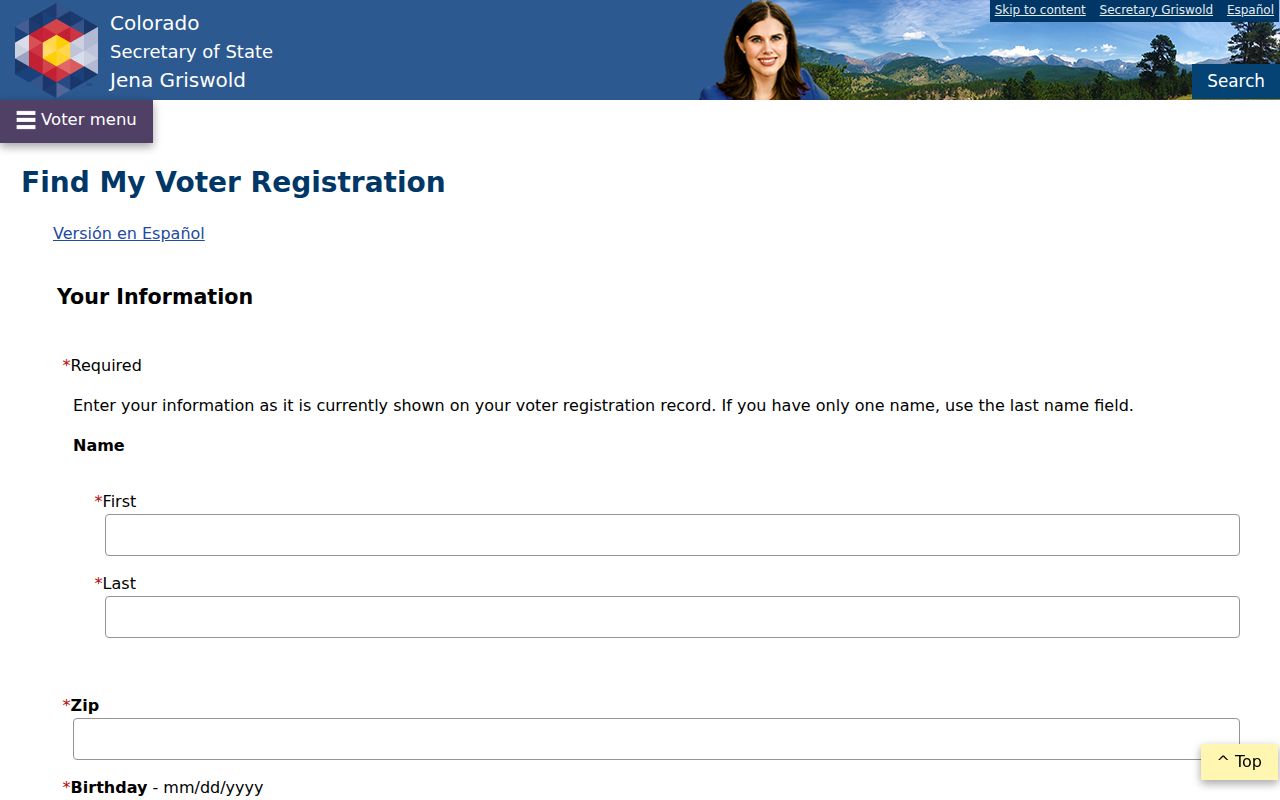
The captured form shows why a no-match should lead to a spelling or ZIP check, then to the county Elections office, not to an attempt to enumerate a household.
Fountain Court Dockets Need Context
The Colorado Judicial Branch dockets page can narrow by Fourth Judicial District, El Paso County, courthouse, court type, division, date, case number parts, case class, party, business, or attorney. At least one filter beyond a date is required. A result can show hearing date and time, duration, case number, hearing type, courthouse, courtroom, appearance type, and a count with pagination. That is a docket event, not the complete case file.
When a name match appears, capture the case number, county, case class, party role if shown, date, and location. Then request the specific complaint, disposition, order, probate item, divorce decree, or register of action through the Judicial document request route. The Fourth District lists the El Paso Judicial Building at 270 S. Tejon Street, Room S101, with 719-452-5000 for the main line and 719-452-5490 for records research.
| Visible party field | Name or business selected in the search block. |
|---|---|
| Placement fields | Case number, case class, hearing date, courthouse, courtroom, and hearing type. |
| Result controls | Showing count, pagination, Export Results, and Printable Version may appear. |
| What remains separate | Complete file, disposition, sealed material, juvenile information, protected victim details, and certified copies. |
View the court docket capture before using a party result as an identity clue.
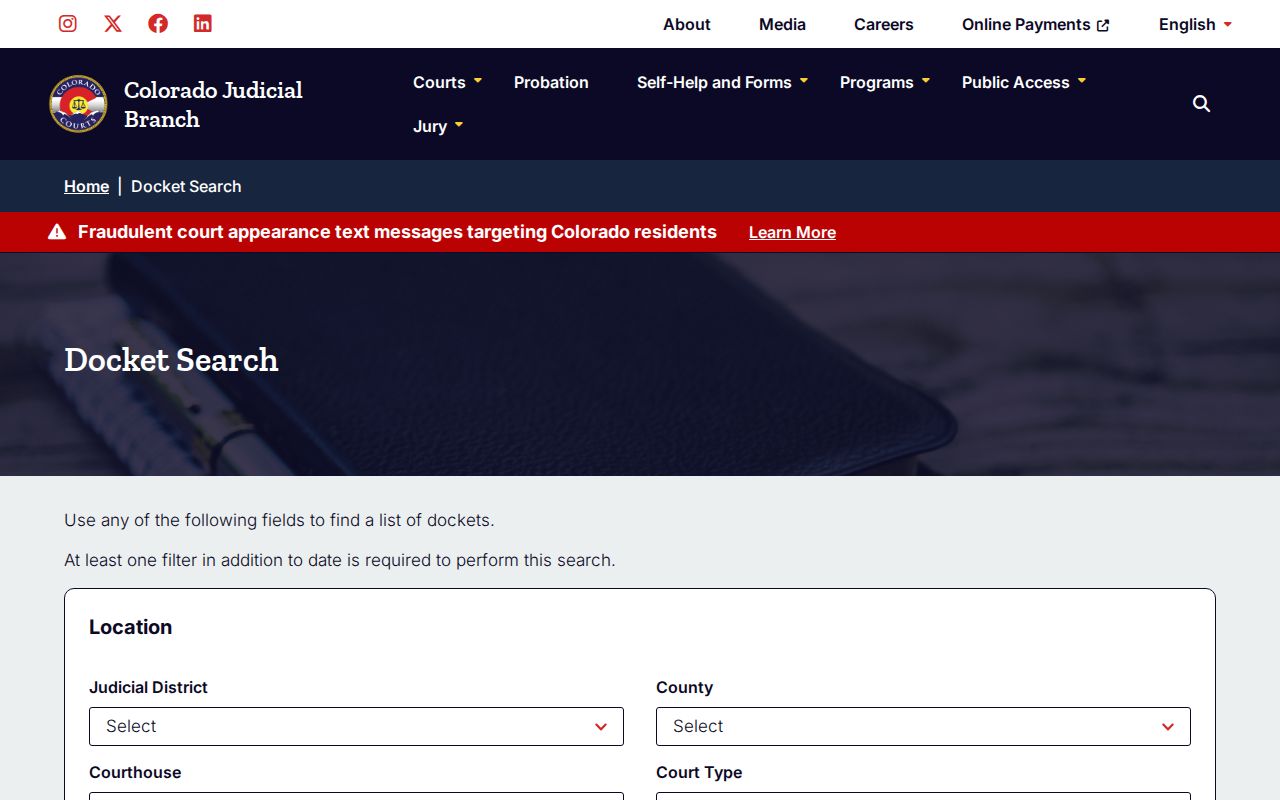
A hearing line can confirm that an event is indexed under a case. It does not establish a current address, guilt, or the outcome of every filing.
Note: A docket event can anchor a case number and date, but it cannot substitute for the court file or a certified order.
Fountain Vital-Record Lookup Paths
Some personal searches have a lawful source-specific route. An heir question belongs with a Fourth District probate case, a will, letters, order, or State Archives record group. A birth-parent connection belongs with Colorado's Voluntary Adoption Registry and confidential-intermediary program for eligible adults and relatives. A former-classmate question is better served by PPLD yearbooks, school publications, directories, and NewsFinder. None of these paths is an open name-and-address index.
Colorado birth and death certificates are confidential under C.R.S. 25-2-117 and use direct or tangible-interest and identity rules. El Paso Public Health lists $25 for the first copy and $20 for additional copies in the same order. Marriage and civil-union licenses and certificates are public through the Clerk route, while applications are restricted. A divorce order comes from the court, not a general county vital-record search.
For adoption, a match through the voluntary registry requires the relevant people to register. A no-match is not evidence that no connection exists. For an heir, use the decedent name, date, case number, and document type. For a former classmate, preserve school, year, page, and exact spelling before checking another source. That is the difference between a focused resident lookup and an unbounded name search.
Fountain License Records for One Resident
The Colorado Secretary of State business search can return an entity name, status, formation date, entity ID, type, jurisdiction, periodic-report month, principal office, registered agent, and filing history. Search routes include business name, trade name, trademark, ID, and document number. The result is an organizational record. It is not proof of a person's home address.
DORA's MyLicense portal accepts profession, first or middle name, last name, license type, license number, and status. The portal says “less is more” and permits a wildcard after partial data. A result should be saved with the licensee name, profession, type, number, status, and any issue, expiration, or discipline field shown. Fountain's City Clerk keeps a business-license list and liquor records, but no public searchable name roster was located.
The Colorado license-search page is the official route for the state lookup.
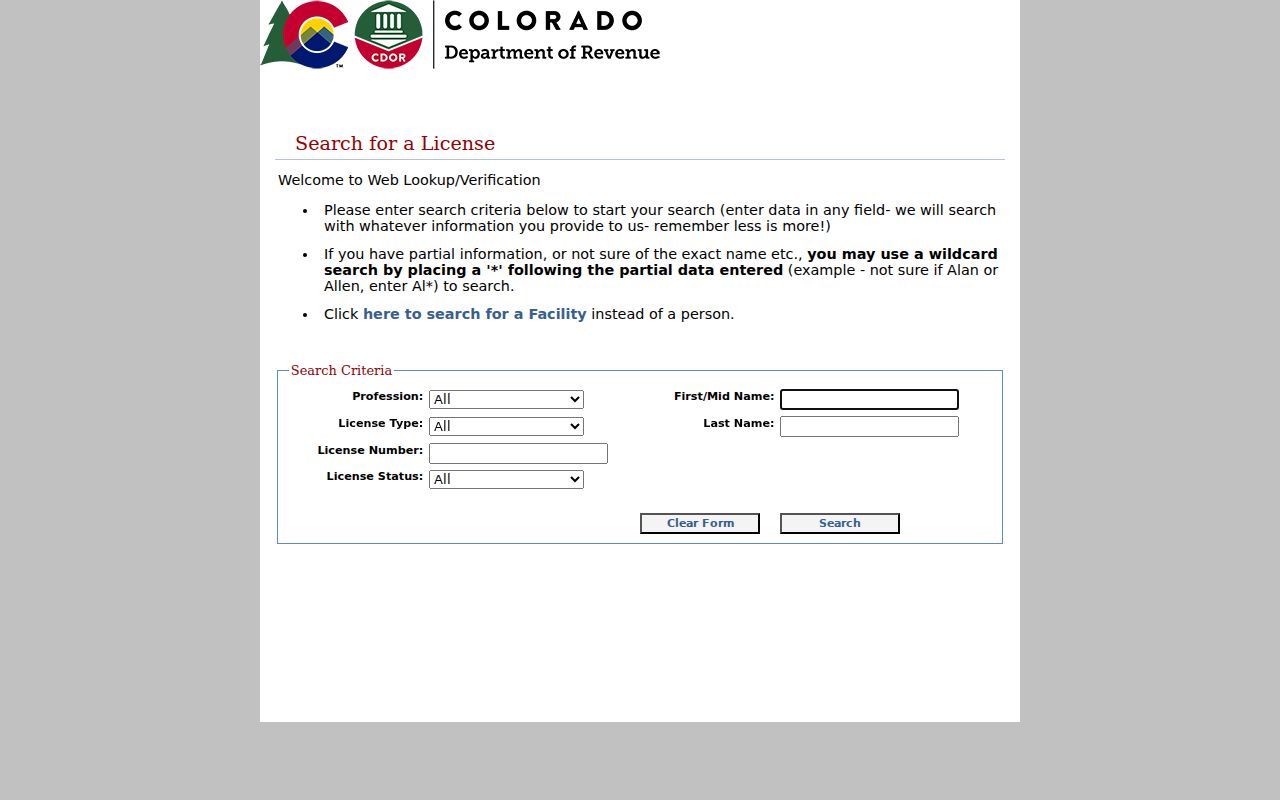
Use an entity or license number as the second anchor. A facility, registered agent, or principal office may describe an organization rather than a private residence.
The Colorado Secretary of State business-search source shows the separate entity route for a resident-affiliation clue.
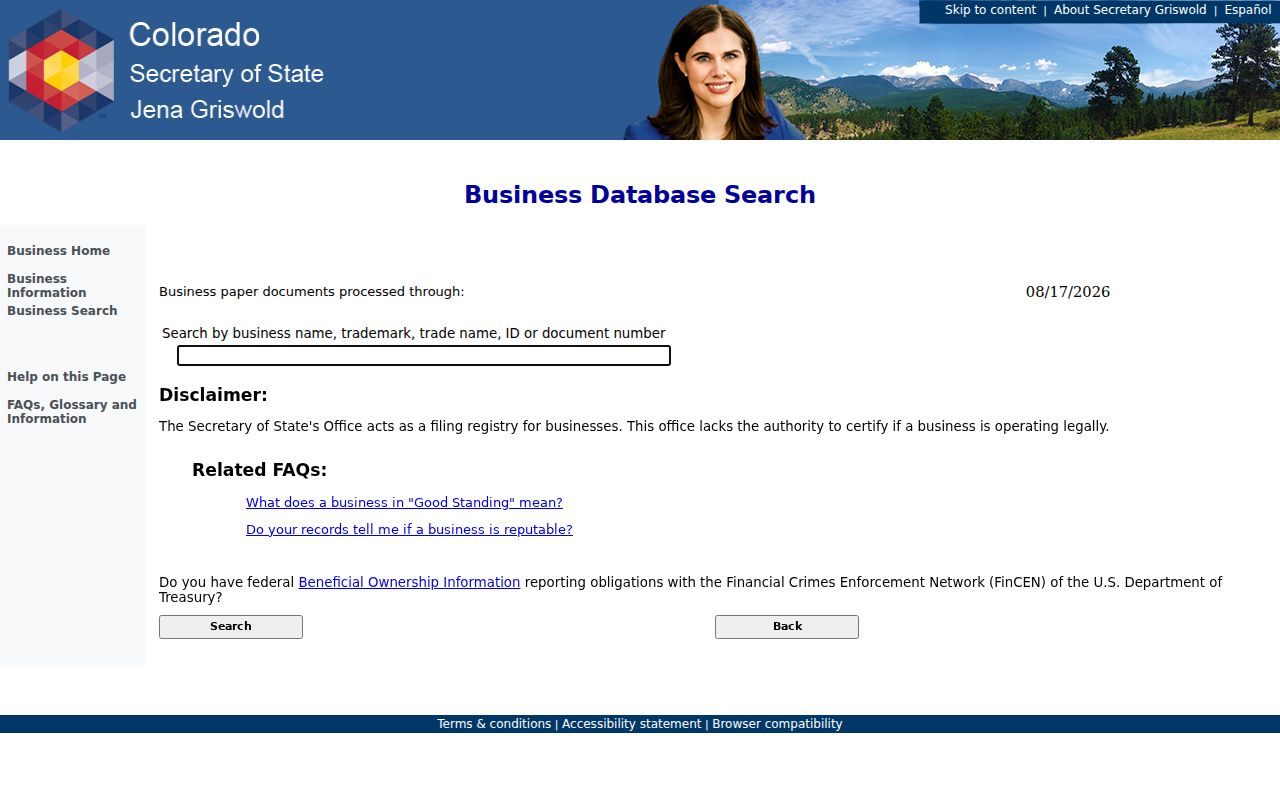
Keep the entity ID, filing status, and principal-office field with the result so an organization is not mistaken for a household.
Fountain Name to Record Trail
For a lawful personal or family-history question, begin with a name, county, date range, and one known fact. The best route is a sequence that changes record type at each step rather than repeating the same broad name search. Record the source and access date as you go.
- Check a business or license affiliation only when it answers the defined question, and preserve the entity or license number.
- If checking your own registration, use the SOS first, last, ZIP, and birthday fields. Do not treat it as a public directory.
- Use the Assessor owner search to identify a parcel, then compare situs, mailing address, parcel, and legal description.
- Use the Recorder for an identified deed or instrument and the court portal for a case number, year, and hearing event.
- Use PPLD directories, NewsFinder, yearbooks, cemetery books, or archives for an older person or event.
- Use Colorado unclaimed-property search only as a name or former-ZIP lead; a claim requires proof and does not verify residence.
If a portal produces a common-name match, stop and gather a second anchor before moving onward. When the question changes to who else lives along a named street, the Fountain street directory page owns the address chain.
The El Paso County Recorder public-access source shows the deed-index route for a name-to-land anchor.
A recorded party can support an identity trail when the parcel, legal description, and date also fit, but it does not prove occupancy.
Fountain Old Address Resident Trail
An old address can be more useful than a name if its history is normalized first. PPLD records street-name changes and odd-even number changes in the 1870s through 1917. Search both street names, a cross street, the directory street guide, a plat, and the legal description. Add Sanborn footprints, permits, tapping records, NewsFinder, obituaries, probate, and cemetery entries as dated clues.
The house-history guide says building-permit material includes March 1900 records, a gap from April 1902 through September 1907, and county permits from 1954 through 1964. Tapping records are partial for 1902 through 1940. Assessor ownership may reach only a few decades and is unreliable before the mid-1990s. These limits make a deed or directory page more valuable than a guessed continuous timeline.
Pairing an old directory entry with a later parcel or court source can verify a trail, but the source definitions remain separate. A historic occupant is not automatically the parcel owner, a mailing recipient, or a current Fountain resident.
Fountain Resident Lookup Warnings
The El Paso County Sheriff inmate search accepts a last name or booking number. Colorado DOC's search uses DOC number, last name, first name, gender, and a CAPTCHA. The federal Bureau of Prisons locator covers federal custody from 1982 to the present. The Colorado sex-offender registry is a statutory public list with warnings that not every qualifying category appears. These are current or status-specific sources, not complete resident directories.
Police, jail, body-camera, incident, accident, traffic, and calls-for-service records use the Sheriff or Fountain Police Records request routes. Requests can require a case number, date, address, involved party, name, or booking detail. Redaction, medical, juvenile, victim, sealed, and investigative limits apply. A public result does not establish guilt, a current address, or a complete personal history.
Use a result only for the question it answers, verify the official page, and note its access date. A no-result may reflect release, a different system, a protected record, or a search mismatch.
Fountain Confidentiality Limits on Lookup
Colorado's Address Confidentiality Program can provide a substitute address and mail forwarding for qualifying survivors of domestic violence, sexual offenses, and stalking. El Paso confidential voters can request protection through the county process, and prior public lists may not be removed retroactively. DMV records are restricted under the Driver's Privacy Protection Act. Vital, juvenile, sealed, medical, victim, investigative, and protected court material has additional limits.
C.R.S. 18-3-602 addresses stalking, and C.R.S. 18-9-111 addresses harassment. A records search should serve family history, reconnecting, a defined civic question, or a personal safety concern. It should not become repeated contact, monitoring, intimidation, or publication of a protected address.
Lawful use. A Fountain resident lookup is a reference workflow, not permission to expose a protected person or pressure anyone. Verify records with the custodian and stop when a confidentiality rule applies.
Note: A lawful dead end can be the correct result when a confidentiality program or eligibility rule shields the record.