
Fountain Directory Collections Across Years
The historical shelf begins with Pikes Peak Library District Regional History and Genealogy at the Carnegie Library in Colorado Springs. Its holdings combine physical volumes, library databases, microfilm, digital items, and staff-pulled archival material. A city directory is not one continuous Fountain census. Publisher boundaries often center Colorado Springs, Colorado City, Manitou Springs, or regional El Paso County, so each result needs its title, year, city heading, and page.
| Collection | Years | Where held | Access |
|---|---|---|---|
| R. L. Polk Colorado Springs, Colorado City, and Manitou volumes | 1879–1929 digitized | PPLD Digital Collections and Carnegie | Browse, OCR, and in-person reference |
| Colorado Springs and regional directory runs | 1879–present, mixed and incomplete | PPLD RH&G and library databases | Catalog, shelves, staff help, database access |
| HeritageQuest directory collection | Many 1897–1963, with gaps | Library-card database | Remote access varies by collection |
| El Paso County Rural Directory | 1937–38, 1947, 1949, 1951, 1955, 1962, 1969, 1972 | PPLD shelves and microfilm | In person; coverage is not annual |
| Telephone books | Most years 1907–present, with gaps | PPLD microfilm, call 384.6 C7192CM | In-person research |
| Digitized 1915 Polk item | 1915 | PPLD Digital Collections | Free item view and OCR where available |
The library describes directory holdings as 1879 to the present in mixed formats, but it does not publish a complete Fountain-specific last-print year. Digitized material is strong through 1929 with gaps. Treat a missing year as a collection question and ask staff to verify the shelf before concluding that no directory existed.
The collection's useful time markers are easy to keep in a short sequence:
- 1879 marks the earliest city-directory spine named by PPLD.
- 1915 supplies a readable R. L. Polk sample with an alphabetical section and street guide.
- 1929 is the end of the digitized Polk run described in the research.
- 1937–38 and the later rural issues extend the household trail beyond the city-centered scans.
See the PPLD Regional History and Genealogy collection page for the Carnegie route, staff contact, local newspaper index, maps, yearbooks, cemetery and obituary material.
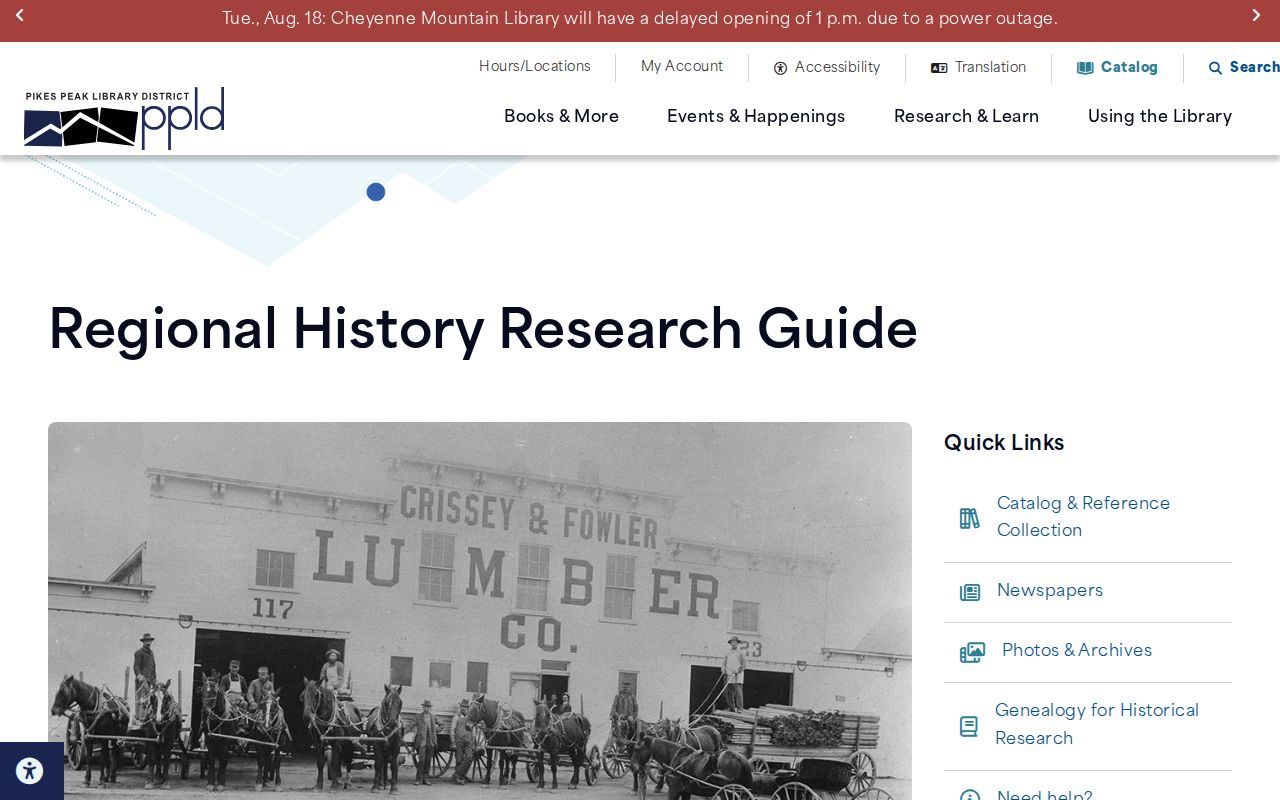
The library image represents a research shelf rather than a single searchable resident file. Save the call number, year, title, and page with every directory clue.
Read a Fountain 1915 Directory Entry
The 1915 R. L. Polk Directory Co.'s Colorado Springs, Colorado City and Manitou City Directory is a useful sample because its metadata identifies the publisher, year, 325-page size, and call number 384.C722CO1915. A city directory entry can have a person or householder name, house number and street, a printed occupation line, a phone or M/R/B-style marker, and a spouse or widow notation where the issue prints one. The street guide repeats the address in an address-to-occupant order.
Read the page image before trusting OCR. Record the exact spelling, street number, street name, page or item ID, relationship notation, printed marker, and the corresponding street-guide entry. The issue's own abbreviation key controls the meaning of its shorthand. A directory entry shows what the publisher listed in that year. It does not prove title, current occupancy, identity, or why a household later moved.
The 1915 Polk directory item is the appropriate source for a sample-page check. Its collection entry is different from the broader digitized directory landing page, so preserve both the item ID and page number.
- Alphabetical entry
- Name-first listing that can include address, printed occupation line, relationship note, phone marker, and a cross-reference.
- Street guide
- Address-first listing that can reveal an occupant when a name is not known.
- Abbreviation key
- The issue's own legend for printed marks; unclear marks should be copied, not guessed.
- Householder
- The person a publisher places at a location, without deciding who else shares the address.
Fountain Reverse Search by Address
A reverse city directory search begins in the street section. It is useful for a family-history question that supplies a house number but not a surname, or for a known name whose spelling varies. The page should be read as a historical snapshot. Use the publisher's city heading, street spelling, number, cross street, and year before translating the result into a present parcel.
- Choose the closest directory year and confirm whether the volume covers Fountain, Colorado Springs, Colorado City, Manitou Springs, or a rural area.
- Open the street guide and search the exact number and street spelling. Note a cross street, occupant, phone marker, and page.
- Move to the alphabetical section and compare the printed name, address, relationship note, and issue-specific marker.
- Repeat in another year, then compare the address with a plat, parcel, newspaper, census schedule, or later directory.
PPLD warns that names changed during the 1870s through 1917 and that odd and even numbers flipped. A reverse entry can therefore be correct even when a modern address search returns nothing. The legal description or a Sanborn map can bridge the old and new locations.
Note: A directory year records a publisher's listing, not continuous residence between issues.
Fountain Rural Directory Runs
Rural directories help fill the space between city-centered books. PPLD lists El Paso County Rural Directory issues for 1937–38, 1947, 1949, 1951, 1955, 1962, 1969, and 1972. Depending on the issue, the entries can work from a household or rural address and may not follow the same name-and-street pattern as a Polk volume. They are useful for a Fountain-area lead when a city directory does not include the address.
Write down whether the issue uses a rural route, a community name, a township clue, or a city label. Then pair the entry with a county parcel, a newspaper item, a census year, a plat, or a later book. A rural directory is a bridge, not a complete substitute for the county roll. The lack of an entry can reflect the book's delivery area, year, or editorial choice.
Note: Rural directory coverage follows each issue's delivery area, so a missing name may reflect geography rather than a missing household.
Fountain Telephone Directory Books
PPLD's telephone books extend the historical address trail beyond the city directory runs. Most years from 1907 to the present are described as available, although issue gaps remain. A telephone book can give a name, number, and address marker for a particular year. Use it as a dated lead and preserve the exact volume, page, and printed format.
Phone books should be read beside the street guide and not treated as proof of land ownership. A number can be unlisted, a line can serve more than one person, and a book may use a regional exchange or postal label. When a historical address matters, compare the phone entry with the parcel legal description, a newspaper notice, or a Sanborn map.
Fountain NewsFinder Obituary Leads
Pikes Peak NewsFinder is a local article index that can add context when a person is missing from a directory. Search a name, address, event, organization, or street, then save the newspaper title, date, page, and index reference. Some records are index-only and others point to a scan or a staff request. The result can lead to an obituary, civic notice, court story, organization item, or address clue.
Colorado Historic Newspapers and library-card databases add statewide or commercial archive access, but title and date coverage vary. A newspaper is a lead source and can contain errors. Confirm a death or transfer through a cemetery entry, probate file, deed, directory, or another dated record. PPLD's staff route is valuable when a scan is not available online.
For a current-person question, keep the newspaper clue in its historical lane and use the Fountain resident lookup workflow for a separate identity check.
Fountain School Directories and Yearbooks
Yearbooks sit beside the city directory as a school-centered source. PPLD's noncirculating Regional History and Genealogy holdings include yearbooks along with newspapers, cemetery books, church material, maps, and census resources. A school and year can narrow a common name, show an activity or organization, and offer a photograph or address clue. Preserve the school name, issue year, page, and printed spelling.
Use a yearbook to build a lead, not to announce a current location. Compare a yearbook name with a directory, obituary, newspaper notice, or official record that has a defined date. School coverage may be local or regional, and a missing issue is a collection gap. Staff can tell whether the item is on a shelf, in a vault, or available through a library database.
Fountain Directory Maps, Census, and Church Books
Sanborn maps, federal census schedules, church registers, cemetery books, and city directories answer different parts of a household question. PPLD describes regional Sanborn maps beginning around 1883 with revisions around 1960. The maps show building footprint, use, street, and lot orientation, not a complete resident list. Federal census images follow the public 72-year rule, and historic boundaries may not match the modern Fountain line.
Church and cemetery material can bridge a gap when a civil index is restricted or absent. FamilySearch's Colorado collection list includes statewide marriages, divorces, naturalization, census, church, military, and an El Paso or Manitou Springs voter collection from 1935–1962. The research did not confirm an El Paso deed or probate digitization there, so do not promise one. Each substitute should be labeled by its own custodian, date, and geography.
Fountain Directory Research at Carnegie
PPLD's Carnegie Regional History and Genealogy department is at 20 N. Cascade Avenue in Colorado Springs. The current guide gives Tuesday through Saturday, 10 to 5, while an older page differs, so check the current library page before travel. General books, directories, maps, yearbooks, and government documents are noncirculating and are viewed in person. Vault and manuscript material is staff-pulled. The archive portal offers keyword search, browse by collection, creator, or subject, a wildcard, finding-aid download, saved searches, and a research-question route.
The Colorado Springs Pioneers Museum's Starsmore Center for Local History adds manuscripts, photographs, maps, blueprints, organization records, diaries, and ephemera. It reports research by appointment Tuesday through Saturday from 1 to 4, with staff response sometimes taking 7 to 10 days. The State Archives finding aids add El Paso County court, probate, coroner, naturalization, divorce, and judgment groups from the nineteenth and twentieth centuries. These repositories do not form one open name index, but they can explain why a directory trail breaks.
The Starsmore Center archive page shows the local-history collection route.
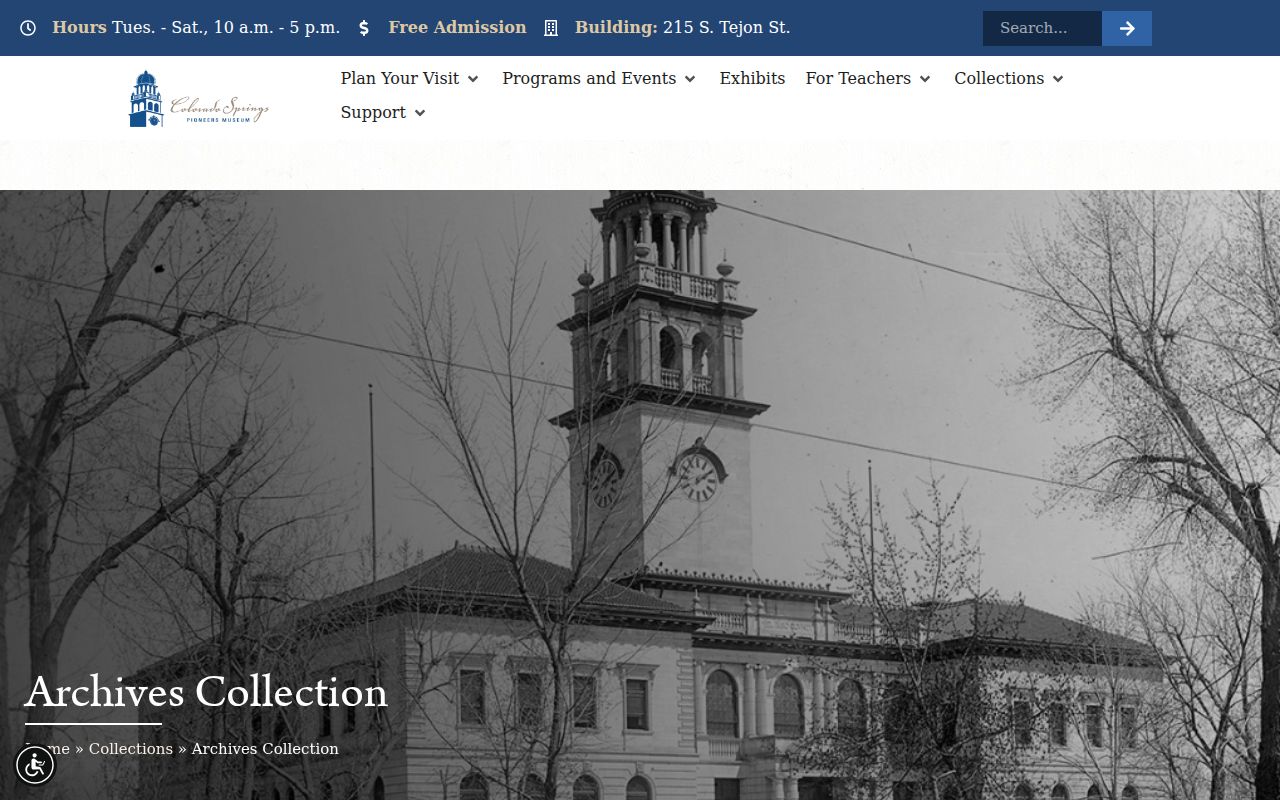
Archive holdings add context around names, streets, and organizations. Request a finding aid or a bounded record group rather than an unscoped search for a person.
The PPLD house-history guide is another useful route because it combines directories, permits, assessor history, deeds, maps, newspapers, utility tapping records, probate, and obituaries.
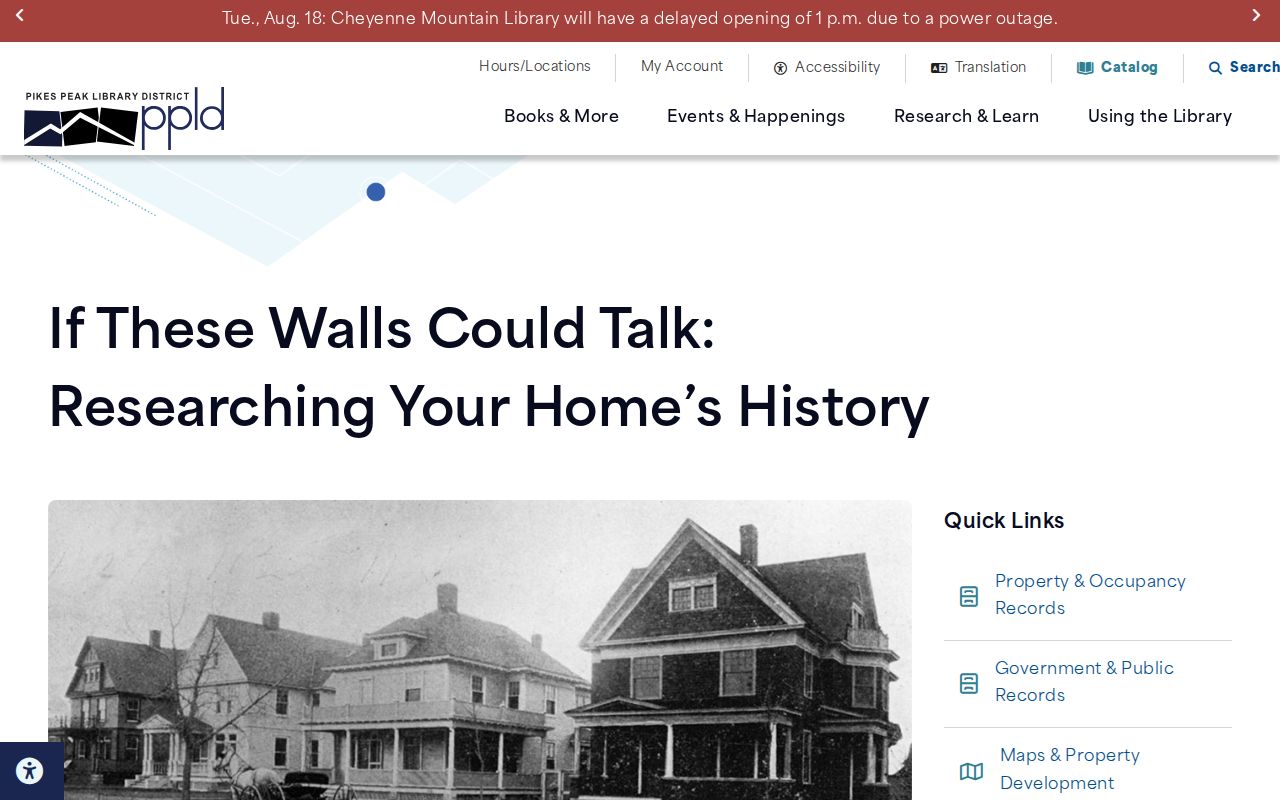
The guide helps place a directory page inside a wider address history without turning one volume into a complete household record.
Note: Carnegie and Starsmore holdings require their own finding aid, appointment, or staff route; neither archive is a single resident index.
Fountain's Directory History Has Gaps
Fountain's record story is tied to a changing county landscape. City materials describe a 1859 founding, 1903 incorporation, Jimmy Camp Creek and Fountain Creek, and the 1888 Big Blast. The 1903 El Paso County courthouse survives in local preservation history and now connects courthouse functions with museum collections. These are useful NewsFinder and archive search anchors when a surname is too common.
A missing directory entry may be explained by publisher geography, a street-name change, the odd-even number flip, a rural route, or a gap in the physical run. Treat each absence as a question for the library. The current Fountain city directory trail is strongest when a page number, issue heading, parcel or cross street, and source access route travel together.
Research habit. Save the volume title, publisher, issue year, city heading, page, exact address, and the source's access date before comparing it with a modern parcel.
Trace Fountain Families Through Directory Years
A household history works best as a sequence of dated snapshots. Begin with the earliest known address and write down the directory year, street spelling, number, name, and any relationship or phone marker. Pair a nearby census year with the directory, then add a newspaper, church, cemetery, probate, deed, or permit clue. A change in house number may be a renumbering rather than a move. A change in name may be a marriage, widow notation, spelling choice, or a different household.
- Choose a directory year and confirm its publisher geography.
- Read both the alphabetical entry and the street guide for the same person or address.
- Compare the result with the closest public census year, keeping the historical boundary beside the result.
- Use NewsFinder, cemetery, church, probate, or a later deed to test a move or family link.
- Repeat across two or more directory years and label every gap instead of filling it with a guess.
The library's directory collection supplies the historical shelf. A current property or court source can verify a later record, but the definitions should not be blended. A person listed in a 1915 book is a historical directory occupant, not automatically a current Fountain resident.